Dental Hygiene
$49 New Patient Special
Exam, X-Rays & Basic Cleaning
Dental hygiene is the practice of keeping your mouth, teeth, and gums clean and healthy to prevent disease. It encompasses both your daily home care routine and professional dental cleanings. Think of it as a partnership — what you do at home every day, combined with what we do in the office twice a year, is what keeps your oral health in top shape.
A solid dental hygiene routine includes:
-
Brushing at least twice daily with fluoride toothpaste
-
Flossing once daily to remove plaque between teeth
-
Using an antimicrobial mouthwash
-
Staying hydrated and limiting sugary foods and drinks
-
Regular professional cleanings by a dental hygienist
Why should you care about Dental Cleanings ?
See a Dental Hygienist at least Twice a Year
Many patients ask me, "If I brush and floss every day, why do I still need to come in?" Great question — and here's the honest answer:
No matter how diligent you are at home, there are places your toothbrush simply cannot reach.
Here's what a professional cleaning every six months accomplishes:
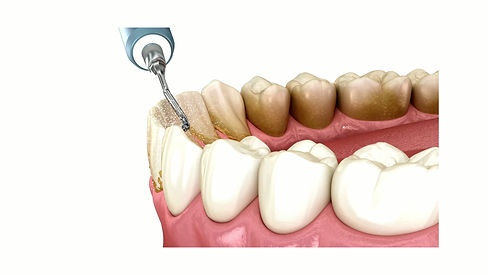
1. Tartar (Calculus) Removal Plaque that isn't removed hardens into tartar within 24–72 hours. Once it calcifies, only a hygienist's professional instruments can remove it. Tartar is a breeding ground for harmful bacteria.
2. Early Detection Your hygienist and I are trained to spot problems before they become serious — early cavities, gum recession, oral cancer, bone loss, and more. Catching these early saves you pain, time, and money.
3. Deep Cleaning Below the Gumline Bacteria accumulate in the pockets between your teeth and gums. Professional scaling cleans below the gumline where your toothbrush can never reach.
4. Polishing & Stain Removal We remove surface stains and leave your teeth polished — a smooth surface that makes it harder for plaque to adhere.
5. Personalized Guidance Every patient is different. Your hygienist can identify your specific weak spots and tailor brushing and flossing techniques specifically for you.

Gums Bleeding
Gum Bleeding — Don't Ignore It
"My gums bleed a little when I brush — is that normal?"
No. Healthy gums do not bleed. Bleeding gums are one of the earliest warning signs of gingivitis, the first stage of gum disease. I hear this from patients constantly, and it's important you understand — bleeding is your body sending you a signal that something is wrong.
The Stages of Gum Disease:
StageName What's Happening
Stage 1 Gingivitis - Inflammation, redness,
bleeding. Fully reversible with
treatment.
Stage 2 Mild Periodontitis - Bacteria move
below the gumline, early bone loss
begins.
Stage 3 Moderate Periodontitis - Deeper
pockets, more bone destruction,
teeth may loosen.
Stage 4 Severe Periodontitis - Significant
bone and tissue loss, tooth loss
likely without intervention.
Long-Term Health Impacts of Poor Oral Health
This is where we really need your full attention, because the consequences extend far beyond your mouth. The research here is compelling and well-established.
🫀 Heart Disease & Stroke
The bacteria from infected gums can enter your bloodstream and contribute to the buildup of arterial plaque. Studies have linked periodontal disease to a significantly increased risk of heart attack and stroke. The inflammation pathways are shared.
🩸 Diabetes
This is a two-way relationship. Gum disease makes blood sugar harder to control, and uncontrolled diabetes makes gum disease worse. If you're diabetic, your oral health is not optional — it's part of your disease management.
🤰 Pregnancy Complications
Pregnant patients with untreated periodontal disease have a higher risk of preterm birth and low birth weight. Hormonal changes during pregnancy also accelerate gum inflammation, which is why we recommend extra cleanings during pregnancy.
🧠 Alzheimer's Disease & Cognitive Decline
Emerging research has found Porphyromonas gingivalis — a key bacterium in gum disease — in the brains of Alzheimer's patients. The link between chronic oral inflammation and cognitive decline is an active and growing area of research.
🫁 Respiratory Disease
Bacteria from the mouth can be aspirated into the lungs, contributing to pneumonia and worsening conditions like COPD. This is especially concerning for elderly patients.
🦴 Osteoporosis
Bone loss in the jaw can be an early indicator of systemic bone density loss, and the relationship between periodontitis and osteoporosis is well documented.
😴 Sleep & Quality of Life
Tooth pain, abscesses, and chronic oral infections affect sleep, nutrition (difficulty chewing), self-confidence, and overall quality of life in ways patients often underestimate.
Our Prescription for You
As your dentist, here is what we recommend:
-
Brush for a full 2 minutes, twice daily — morning and before bed
-
Floss every single night — no exceptions
-
See your hygienist every 6 months — or every 3–4 months if you have a history of gum disease
-
Never ignore bleeding gums — call us, that's what we're here for
-
Tell us about your full health history — oral health and systemic health are deeply connected
