What Your Dentist Knows About Sleep Apnea and Heart Disease
A routine dental cleaning can reveal more than plaque, cavities, or bleeding gums. In the same visit, a dentist may spot signs that point to a hidden breathing problem during sleep, one that can strain the heart night after night.
Obstructive sleep apnea is often missed because it happens when a person is asleep. Many people do not remember waking up. They may not know they snore. They may explain away morning headaches, dry mouth, daytime fatigue, or high blood pressure as stress or aging.
The mouth can tell a different story.
Dentists see the airway, the tongue, the bite, the teeth, the jaw, and the wear patterns that build up over years. Those clues can help connect sleep apnea and heart disease earlier, especially when a patient has not yet had a sleep study or a heart-related diagnosis.
This article is for general education only. It does not replace medical advice, diagnosis, or treatment from a licensed health care provider.

Sleep apnea puts the heart under nightly stress
Obstructive sleep apnea, often called OSA, happens when the soft tissues in the throat relax and narrow or block the airway during sleep. Breathing may pause for several seconds at a time. In more severe cases, this can happen many times per hour.
The sleeper may not fully wake up, but the body reacts as if it is under threat.
When breathing stops or drops, oxygen levels can fall. The brain then signals the body to wake just enough to reopen the airway. That response can trigger a surge of stress hormones, a faster heart rate, and a rise in blood pressure.
Over months and years, that pattern can place real strain on the cardiovascular system.
Sleep apnea has been linked with a higher risk of:
High blood pressure
Repeated drops in oxygen and bursts of stress hormones can keep blood pressure elevated, even during the day.
Atrial fibrillation
Irregular pressure and oxygen changes may contribute to abnormal heart rhythms.
Coronary artery disease
Poor sleep quality, inflammation, and oxygen stress can add to other heart risk factors.
Stroke
OSA is associated with vascular strain and blood pressure problems, both of which matter for stroke risk.
Heart failure complications
Poor nighttime oxygen levels can make existing heart problems harder to manage.
Research has consistently shown a connection between untreated moderate to severe sleep apnea and cardiovascular disease. The risk is not the same for every person, and sleep apnea is not the only cause of heart disease. Still, the relationship is strong enough that snoring, witnessed pauses in breathing, and unexplained fatigue deserve attention.
The mouth often shows signs before a diagnosis
Primary care visits are usually short. A physician may check blood pressure, review medications, listen to the heart and lungs, and ask broad screening questions. Unless sleep symptoms come up, the mouth and airway may not get a close look.
A dental exam is different.
Dentists and hygienists spend time looking directly at structures that affect breathing during sleep. They can see the size and shape of the tongue, the wear on teeth, the bite, the palate, and signs of chronic mouth breathing.
That does not mean a dentist can diagnose sleep apnea from a visual exam alone. A formal diagnosis usually requires a sleep test. But a dentist trained to recognize airway risks may notice patterns that suggest a patient should be screened.
Some of the most common signs include the following.
Worn, flat, or chipped teeth
Teeth grinding, also called bruxism, is one of the most common clues. Patients may think grinding is only related to stress. Sometimes it is. But grinding can also happen when the body is trying to reopen the airway during sleep.
A dentist may notice:
Flattened biting surfaces
Small cracks or chips
Worn enamel
Sensitive teeth
Broken fillings or crowns
Jaw muscle tenderness
Bruxism alone does not prove sleep apnea. Many people grind their teeth for other reasons. But when it appears with snoring, morning headaches, or daytime sleepiness, it becomes a more meaningful clue.
A scalloped tongue
A scalloped tongue has wavy edges where the tongue presses against the teeth. This can happen when the tongue is relatively large for the mouth or when the jaw does not provide enough room.
During sleep, a crowded tongue can fall backward and narrow the airway. A dentist may see scalloping and ask whether the patient snores, wakes with dry mouth, or feels tired despite a full night in bed.
A narrow jaw or high palate
The shape of the upper jaw and palate can affect nasal breathing and tongue space. A high, narrow palate may be linked with a smaller nasal airway. A retruded lower jaw can make it easier for the tongue to fall back during sleep.
These features do not mean someone will definitely have OSA. They do suggest that the airway may be more vulnerable, especially when combined with weight changes, alcohol use before bed, nasal congestion, or aging.
Redness from mouth breathing
People who struggle to breathe through the nose often breathe through the mouth at night. Over time, this can dry the tissues in the mouth and throat.
A dentist may notice:
Dry mouth
Bad breath
Red or irritated gums
Higher cavity risk
Cracked lips
Thick saliva
Dry mouth matters because saliva protects the teeth. It helps buffer acids, wash away food particles, and control bacteria. When mouth breathing reduces saliva, both oral health and sleep quality can suffer.

Why sleep apnea can hide in plain sight
One reason sleep apnea remains underdiagnosed is that the symptoms can sound ordinary.
A person may say, “I am just tired.”
A partner may say, “They snore, but they have always snored.”
A patient with high blood pressure may assume medication is the only answer.
Many people with OSA do not fit the old stereotype. Sleep apnea can affect adults of many body types, ages, and backgrounds. It can also affect people who do not feel sleepy during the day. Some experience anxiety, poor focus, morning headaches, acid reflux, or frequent nighttime urination instead.
Dentists can help because they see patterns over time. A single chipped tooth may not say much. Repeated fractures, heavy grinding, dry mouth, a crowded tongue, and a history of snoring say more.
That pattern can lead to a simple but important question:
Has anyone ever talked with you about sleep apnea?
For some patients, that question is the first step toward getting tested.
The heart signs can show up outside the bedroom
Sleep apnea does not stay neatly contained to sleep. Its effects can show up during the day, especially in blood pressure and heart rhythm.
When breathing repeatedly stops during the night, the body experiences cycles of low oxygen and sudden arousal. The nervous system becomes more active. Blood vessels may tighten. Inflammation can rise. Sleep becomes fragmented, even if the person does not remember waking.
That helps explain why untreated sleep apnea is commonly discussed in connection with high blood pressure that is difficult to control.
A person may be more likely to need screening if they have:
Loud, regular snoring
Witnessed pauses in breathing
High blood pressure
Atrial fibrillation
Morning headaches
Daytime sleepiness
Trouble concentrating
Waking up gasping or choking
Dry mouth on waking
Nighttime teeth grinding
The more signs that appear together, the more reason there is to ask about a sleep evaluation.
A dental exam cannot diagnose sleep apnea, but it can reveal airway clues that deserve medical follow-up.
What happens when a dentist suspects sleep apnea
A responsible dentist does not simply look in the mouth and declare sleep apnea. The better path is screening, referral, diagnosis, and coordinated care.
A typical process may look like this.
The dentist screens for risk
The dental team may ask about snoring, sleep quality, morning headaches, daytime fatigue, and medical history. They may also look at jaw position, tongue size, tooth wear, and signs of mouth breathing.
Some offices use screening questionnaires. Others may take airway-focused images or measurements. These tools can support the conversation, but they do not replace a sleep test.
A physician orders or reviews a sleep study
A sleep study measures breathing, oxygen levels, sleep stages, heart rate, and other signals. Some studies take place in a sleep lab. Others can be done at home for patients who are good candidates.
The sleep study helps determine whether OSA is present and how severe it is.
Treatment is matched to the patient
Treatment depends on the severity of sleep apnea, the patient’s anatomy, medical history, and personal needs.
Common options include:
CPAP therapy
A CPAP machine keeps the airway open with gentle air pressure. It is often used for moderate to severe OSA.
Oral appliance therapy
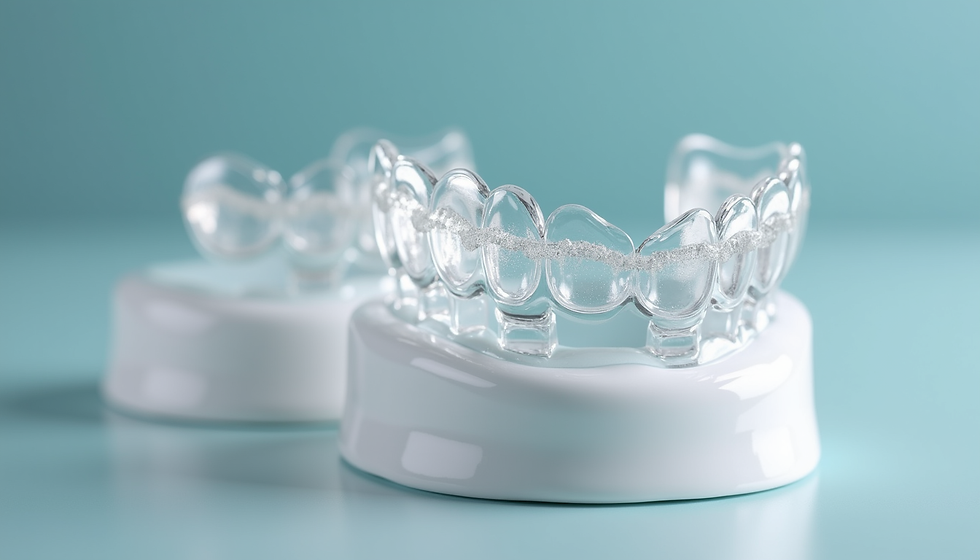
A custom dental device can move the lower jaw forward to help keep the airway open. This may be used for some patients with mild to moderate OSA, or for people who cannot tolerate CPAP.
Weight management when appropriate
Weight changes can affect airway resistance, but OSA is not only a weight issue.
Nasal breathing care
Treating allergies, congestion, or nasal obstruction may help some patients breathe better at night.
Sleep position changes
Some people have worse apnea when sleeping on their back.
Surgical options
In select cases, surgery may address structural airway problems.
A dentist’s role is often strongest with oral appliance therapy and long-term monitoring of the teeth, jaw joints, bite, and symptoms.

Oral appliances are not the same as store-bought guards
Many people know about nightguards for grinding. An oral appliance for sleep apnea is different.
A regular nightguard protects teeth from wear. It does not treat the airway. In some cases, a simple flat guard may even allow the lower jaw or tongue to fall backward, which may worsen breathing for certain patients.
A sleep apnea oral appliance is designed to hold the lower jaw in a forward position. That forward position can help create more space behind the tongue and reduce airway collapse.
The appliance must be custom-made and monitored. Fit matters. Jaw comfort matters. Bite changes matter. Follow-up matters.
A qualified dentist may adjust the device over time and work with the medical provider to confirm that it is helping. Symptom improvement is useful, but objective follow-up testing may be needed to know whether breathing events have improved enough.
The dentist and doctor should be on the same team
Sleep apnea sits between dentistry and medicine. The airway runs through the mouth and throat, but the effects reach the heart, brain, and metabolism.
That is why communication matters.
The dentist may be the first to notice the oral signs. The physician may manage blood pressure, heart rhythm, diabetes, or other health concerns. A sleep specialist may diagnose the disorder and guide treatment. A cardiologist may be involved if heart disease or arrhythmia is already present.
Good care avoids treating each symptom in isolation.
For example, a patient with cracked teeth, high blood pressure, and loud snoring does not need three disconnected conversations. They need one connected picture. The dental wear may reflect nighttime grinding. The grinding may be related to airway stress. The airway stress may be contributing to blood pressure strain.
The goal is not to create alarm. The goal is to catch risk earlier.
What to tell your dentist at the next visit
A dentist can see a lot, but patient history fills in the gaps. Before the next dental appointment, think about sleep and breathing symptoms that may seem unrelated to teeth.
Bring up any of the following:
Snoring that happens often
Waking up gasping or choking
A partner noticing pauses in breathing
Morning headaches
Dry mouth on waking
Unexplained tooth grinding
Jaw soreness in the morning
Daytime fatigue
High blood pressure
Atrial fibrillation or other heart rhythm concerns
Also mention whether a physician has recommended a sleep study, whether CPAP has been tried, or whether a current oral appliance feels uncomfortable.
A short conversation can change the direction of care. It may lead to a referral, a sleep test, or a treatment option that protects both sleep and long-term health.

The takeaway is simple
The mouth is not separate from the rest of the body. Worn teeth, a scalloped tongue, dry mouth, jaw pain, and airway crowding can all point to stress that happens during sleep.
A dentist cannot diagnose heart disease from a dental chair. A dentist also cannot diagnose sleep apnea without proper testing. But dentists can notice signs that other clinicians may not see.
If those signs lead to a sleep evaluation, the benefits can reach far beyond better rest. Treating sleep apnea may help reduce strain on the cardiovascular system, support healthier blood pressure, protect teeth from grinding damage, and improve daily energy.
The next routine cleaning may be more than a cleaning. It may be the first place someone connects the mouth, the airway, and the heart.


Comments